On 30 September & 1st October 2013, HPi hosted the 42nd RSG meeting at its HQ in Wallingford, UK. The meeting was attended by 18 representatives of the boating industry and many Notified Bodies, as well as a representative of ADCO, the EEA’s RCR market surveillance committee. Many topics were discussed with the aim of agreeing common technical interpretations for the RCR itself and the supporting standards as well as aligning the procedures followed by the Notified Bodies.
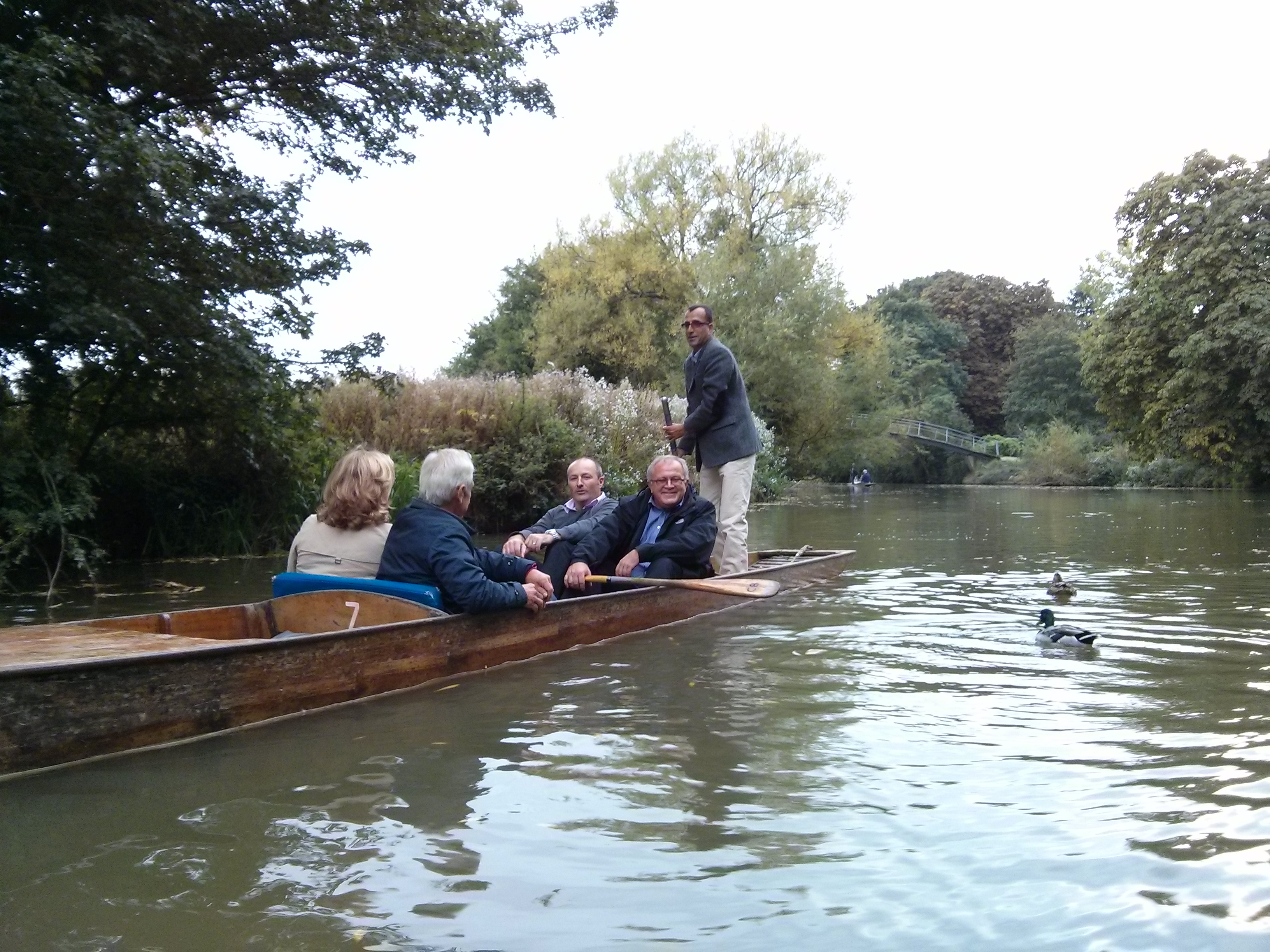
In between the meetings, the committee were taken punting in Oxford. This was not only for recreation! The topic of how to regulate punts, a very peculiar type of boat found only in a small number of towns in England, has come before the committee on several occasions over the years. HPi is pleased to report that nobody fell-in the river.
HPi will be informing its customers, who may be interested in decisions made at this meeting, in due course.
RSG representatives from UK, Turkey, Poland and Sweden all in one punt
HPI’s CEO, Alasdair Reay, will be making a presentation at the annual conference of the Association of Brokers and Yacht Agents. The conference is to be held at on 12 June 2013 at the Marwell Hotel near Winchester. Alasdair’s presentation is entitled What brokers need to know about RCR in 2013. If you are interested in attending, please contact ABYA.
In the recent days, 3 updates & 1 entirely new RCR standard, have been harmonised:
EN ISO 10133:2012 Small craft – Electrical systems – Extra-low voltage d.c. installations
EN ISO 13297:2012 Small craft – Electrical systems – Alternating current installations
EN ISO 21487:2012 Small craft – Permanently installed petrol and diesel fuel tanks
EN ISO 25197:2012 Small craft – Electrical/electronic control systems for steering, shift and throttle
This means that the clock is ticking towards the day by which manufacturers should have changed production from the old to the new standard. RSG has also introduced some recent changes in interpretation of which the industry should be aware.
Download the HPi RCR Update Bulletin 2013-04-03 which provides a synopsis of the major changes to the standards and interpretations and the dates by which the changes should be implemented.
HPi introduced on their website a fully functional free online tool to verify the PER risk category of pressure equipment in accordance to the PER 97/23/EC Directive.
The user friendly tool allows the manufacturer to verify the risk category in seconds and for vessels without a value of capacity in litres we included the approximate value by calculating the volume of the cylindrical shell (assuming flat heads).
The list of available modules is also given as an output and the page can be printed.
Siilja Symphony – home for the RSG Group for 3 days in February 2013
The RSG (Recreational Craft Sectoral Group) is the forum for Notified Bodies, industry representatives and the EU Commission to share and harmonise questions of technical interpretation of the Recreational Craft Regulations (RCR). The group meets once every 4 months and all Notified Bodies are expected to be regular attendees. On 4th to 6th February 2013, the group, with Alasdair Reay (CEO of HPi-CEproof) met onboard the Silja Symphony, sailing between Stockholm and Helsinki, hosted by Notified Bodies DNV and VTT from Sweden and Finland respectively.
On the opening day of the meeting, Jan Mayerhoffer, the EU Commission representative, reported that the Commission’s Standing Committee had met in Brussels on 31st January 2013 and pushed forward with the new edition of the Recreational Craft Regulations. This is now expected to be adopted in mid 2013 followed by a 2 year transition/transposition period. The new RCR should then be in force in mid 2015. The new RCR is not an amendment but a replacement of the current legislation. HPi will post more details once the final draft is ratified.
The group then continued the meeting by discussing the many “Proposals for Enquiry” that had been submitted for consideration and issuing several “Recommendations for Use” for those enquiries thought of sufficient interest or concern to merit the publishing of the formal answer.
Should anyone have any questions that they would like the group to consider, please contact HPi at HQ.
HPi-CEproof Ltd, a European [tooltip text=”An organisation licensed by the EU Commission to issue ‘CE’ certificates of conformity for one or more EU product Directives.”]Approved Body[/tooltip] for several European [tooltip text=”the Pressure Equipment (Safety) Regulations (PER), the Simple Pressure Vessels (Safety) Regulations (SPV) & the Recreational Craft Regulations (RCR)”]product directives[/tooltip], has more than doubled its turnover over the last 2 years: a time when other certification bodies have been closing down. Across the whole of EU the number of certifiers has dropPER dramatically. HPi now finds itself the only Recreational Craft Regulations Approved Body in the United Kingdom (an island nation of seafarers!) yet HPi has raised its market share across all its sectors, all over the world.
One of HPi’s new ground-breaking customers. Gibbs Sports Amphibians Inc and their QuadSki – Jet-Ski and Quad-Bike in one.
Efficiency
How has HPi managed to double its turnover in such difficult times? By concentrating on what it does best. The company began trading in 1996 but in 2010 changed ownership and promptly cut the number of services by 30%. With the focus now on the company’s strengths, management set about improving procedure so that the time of response was shorter and the overheads lower. One way of doing this is through partnerships.
Where some certifers proudly claim to have offices wherever you might be located, HPi would point to the cost associated with running a large number of offices – rent, employer’s legislation & taxes, human resource issues etc. Every certificate must pay for these overheads. Instead, HPi has chosen to partner with organisations around the world who can provide knowledgeable inspection staff on a project basis. (See the news item of the partnership with ABS Group, for example). This leaves HPi’s experts at HQ where they use their experience to review reports and make the decisions.
Furthermore, HPi project files remain the responsibility of a single member of staff, ensuring clients have a single point of contact with whom they can build a relationship. There is no need for local inspectors to say “I’ll have to ask HQ” or for anyone to say “I don’t do electrics. That’s another department/office”. Clients deal with the top decision maker at HQ directly and can discuss any concerns or ideas for future development and come away with an immediate resolution.
This level of service is valued by all. In recent months HPi’s new clients have included blue-chip organisations such as GE and Fairline as well as individuals making model steam trains and small boats in their garden sheds. It has also brought clients with particularly innovative products that need close dialogue with their certifier’s decision makers. Gibbs Sports Amphibians Inc (photo above) is a leading example.
The new HPi certificate. Click to enlarge the image and then use your smartphone to scan the code on the screen and verify the certificate.
Combating Fraudulent Certificates
One of the frustrating aspects of being a respected certification body is that the greater the level of respect, the more people want to make fake certificates. Not only do the fakes threaten to undermine the status of the certifier and annoy manufacturers who compete with the forgers, but a great deal of time is wasted answering calls to confirm the authenticity of certificates. In response to this challenge, HPi has just launched its new-look certificates. As well as using a complex background graphic, HPi is the first certification body to print a unique QR code on each certificate. Anyone presented with a HPi certificate can use their smartphone to scan the code and within a couple of seconds, they will be connected to the HPi servers and see an image of the original certificate. Thus they can verify the authenticity of the certificate they hold in their hands. Alternatively the certificate number can be entered on the HPi website to view the same certificate image.
HPi has invested in cutting edge technology to generate the certificates and handle the uploading to servers so that HPi staff can spend their time making technical decisions on their customer’s projects rather than pushing around paperwork. With this level of efficiency, even the company owner is free to spend 85% of his time on project work. Thus the management overhead and chains of command are as small as possible. This results in exceptionally rapid turn-around times at a low price. Client feed-back in recent months is showing astonishment and delight with HPi’s services.
HPi CEO, Alasdair Reay, will be visiting METS on Wednesday 14th November 2012. He has a number of meetings scheduled through the day but if you would like to meet him there, please call him directly on +44 7812 183328.
HPi-CEproof and ABS Group, the consulting division of the American Bureau of Shipping, have recently signed a partnership agreement to provide a combined PER inspection and certification service to industry all over the world. The arrangement ensures that customers of either company benefit from having local ABS inspectors with both ASME and PER credentials combined with HPi’s highly experienced design review team and Approved Body status.
HPi CEO, Alasdair Reay, said “HPi is delighted that ABS made the approach to partnership with us. As an ex-employee of ABS myself, I know the nature of the company and greatly admire ABS’ staff training programs in particular. HPi is convinced that the calibre of personnel that this partnership offers our customers is second to none.”
Following the recent announcement by the Royal Yachting Association (RYA) to cease its Approved Body service for the European Recreational Craft Regulations, HPi finds itself the sole RCR certifier native to UK.
This now means that HPi carries the sole UK vote at the RSG forum (where technical interpretations for RCR are debated and regulated). HPi understands the gravity of this responsibility and is now planning a series of winter events where UK boatbuilders can get to know HPi and discuss technical interpretation of standards such that HPi can better represent the UK industry’s concerns. The next RSG meeting is in Nantes in November.
HPi has also recently joined the committee of the British Marine Federation’s Leisure Boat Builder’s Association (LBBA). This is an excellent forum for this type of discussion and HPi would encourage all BMF member boat builders to attend their meetings. (The next LBBA meeting will be at the London Boat Show in January 2013).
Watch this news channel for details of these events but if any manufacturers wish to discuss any technical regulatory issues, they should contact us.
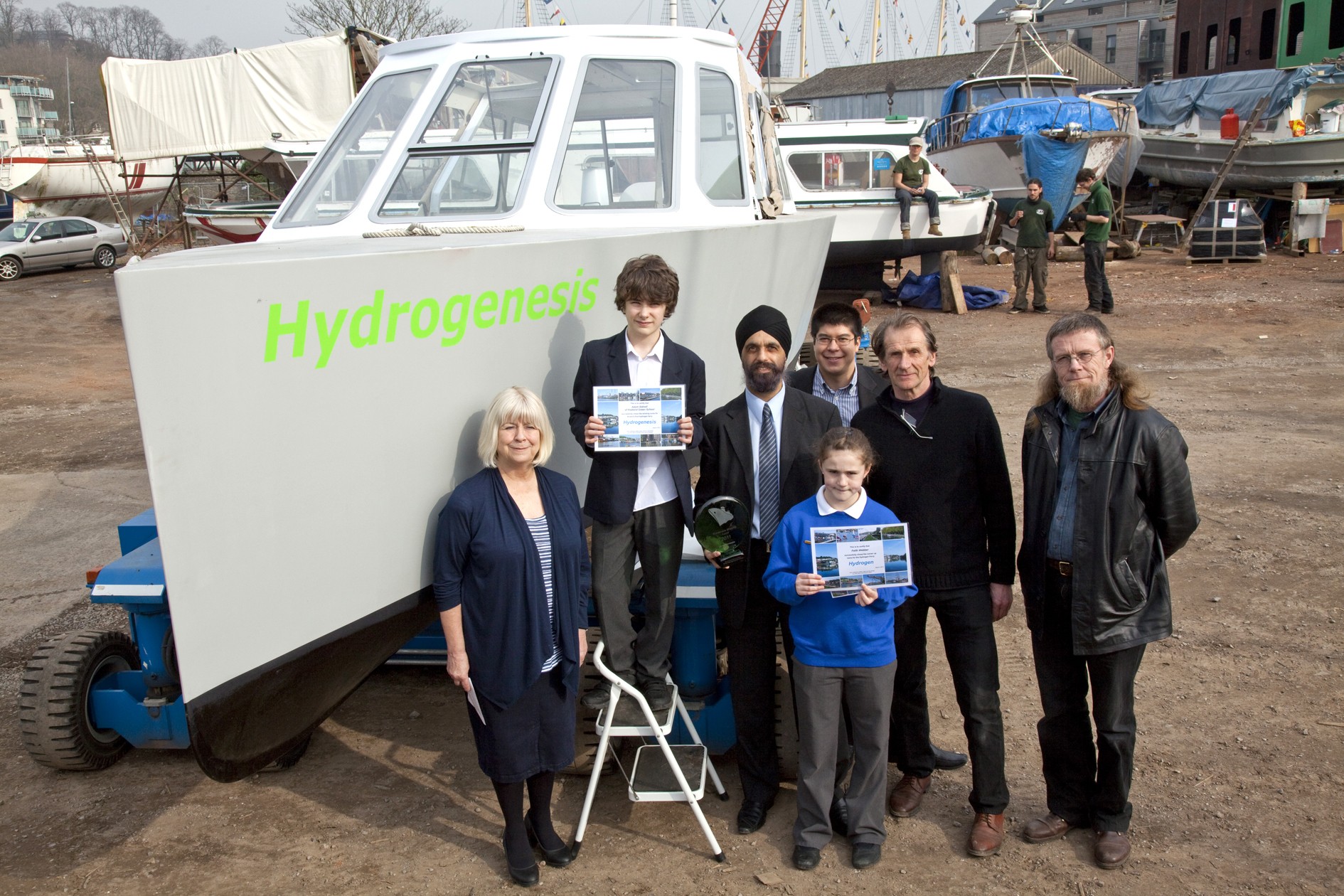
Hydrogenesis, the UK’s first Hydrogen-powered boat, has been certified to the UK Recreational Craft Regulations 2017 by HPi-CEproof and now proudly displays a UKCA Mark.
The ferry carries up to 12 passengers with 2 crew and was built by Bristol Hydrogen Boats – a consortium formed between No 7 Boat Trips, the Bristol Packet, and Auriga Energy Ltd. Air Products have provided the hydrogen fuel and the refuelling infrastructure to the project. Bristol City Council has supported the development with an investment of £225,000. Work on the boat was completed in a boatyard at Weston-super-Mare and is now in service, carrying passengers around Bristol Docks.
As an alternative to petrol and diesel engines, hydrogen powered transport impacts significantly less on the environment as they produce zero direct emissions: the only waste product is water. This would mean a big reduction in air and water pollution, in addition to reduced noise, in the harbour if the technology was widely adopted in the future.
Hydrogenesis – the UK’s first hydrogen fuel cell powered boat
Jas Singh, Managing Director of Auriga Energy Ltd and a spokesperson for the consortium said: “This project is bringing innovative hydrogen and fuel cell technologies to Bristol and one of the key aims is to inform the public and enthuse the engineers of tomorrow.”
Alasdair Reay, Managing Director of HPi-CEproof Ltd said: “HPi-CEproof is proud of its involvement with Hydrogenesis. It has been a fascinating project and blends the
company’s two EU certification accreditations: recreational craft & pressure equipment. We hope this project shows the industry that hydrogen fuel cells are now a viable alternative to traditional propulsion systems.
We use cookies to ensure that we give you the best experience on our website. If you continue to use this site we will assume that you are happy with it. Privacy policy