HPi Verification Services are at Boatlife 2024

To further support the UK’s Inland Waterways boatbuilder and Sailaway builders, HPi Verification Ltd are sponsoring this year’s Inland Waterways section at the Boatife Boat Show.

Running from 15th to 18th February the Boatlife Show has grown year on year. HPi will have members of our team at the show every day should you wish to arrange a meeting.

Join our team

We’re looking for the right person, rather than the right CV

We’re looking for someone to join our team and develop into a EN 1090 / ISO 3834 Inspector, carrying out conformity assessments, factory inspections, audits and technical assessments for manufacturers across Ireland and the EU.

We’re deliberately not looking for someone who already ticks every box. Previous EN 1090 or ISO 3834 experience would be an advantage, but it is not essential. We’re looking for someone with the right technical background, judgement and attitude, who we can train and develop into a competent inspector within our certification activities.

There is also an opportunity for the successful candidate to develop into other areas of our industrial certification work, including quality-system and manufacturing audits in support of PED (Pressure Equipment Directive) conformity assessment.

If you’re technically curious, enjoy solving engineering problems, have practical experience in the welding industry and want to develop specialist expertise in conformity assessment, we’d love to hear from you.

LOCATION: Ireland and/or EU

The person we’re looking for

The minimum requirements are:

  • Current, active ISO 9001 auditor experience.
  • At least three years of professional experience in the welding field within the last five years.
  • A sound understanding of welding processes, fabrication and manufacturing.
  • Good technical judgement and the ability to assess evidence objectively.
  • Strong written and verbal communication skills.
  • Good organisation and time-management skills.
  • Confidence working directly with manufacturers and technical personnel.
  • Strong IT skills, particularly Microsoft Office and Excel.
  • Willingness and ability to travel within Ireland and the EU, with occasional international travel.
Previous experience with EN 1090, ISO 3834 or CPR conformity assessment is an advantage, but is not a requirement.

We will provide the technical training and support necessary to develop your knowledge of the applicable standards, our certification schemes, inspection methodology and HPiVS processes.

There is also scope to develop your competence in PED-related quality and manufacturing audits, allowing you to support our wider industrial certification activities.

What’s much harder to teach is sound judgement, curiosity, attention to detail, independence and the ability to communicate technical conclusions clearly.

We’re therefore interested in people who can combine practical welding knowledge with an auditor’s mindset and a sensible, evidence-based approach to conformity assessment.

The role

Depending on your existing experience and how the role develops, your responsibilities may include:

  • Carrying out EN 1090 conformity assessments and Factory Production Control audits.
  • Conducting ISO 3834 assessments and welding quality audits.
  • Assessing manufacturers’ welding coordination arrangements, procedures, qualifications and personnel.
  • Reviewing technical and quality documentation against applicable standards and certification requirements.
  • Carrying out factory inspections and witnessing relevant manufacturing and welding activities.
  • Preparing clear, technically sound inspection and assessment reports.
  • Working directly with manufacturers, welding coordinators, quality managers and technical personnel.
  • Supporting clients in understanding certification and conformity-assessment requirements.
  • Developing your knowledge of EN 1090, ISO 3834, the Construction Products Regulation, the Pressure Equipment Directive and associated European standards.
  • Supporting the continued development of HPiVS certification and inspection activities.
  • Contributing to technical discussions, standards development and industry working groups where appropriate.

The role is intended to develop with the successful candidate. Someone joining with strong welding and auditing experience may initially focus on EN 1090 and ISO 3834 while developing the additional technical knowledge required for our certification schemes. Over time, there may be opportunities to take on PED auditing and other industrial conformity-assessment work.

What we offer

The exact working arrangement for this position is not yet fixed.

We are considering both:

  • a direct employment arrangement, or
  • working with an experienced freelance / contract inspector as part of our wider inspection network.

The appropriate arrangement will depend on the candidate’s experience, location, availability and the needs of both the individual and HPiVS.

For the right person, we can provide training, technical support and opportunities to develop competence across EN 1090, ISO 3834, CPR and PED-related conformity assessment.

If the position develops into a direct employment role, the applicable employment package and benefits will be discussed as part of that arrangement. For freelance or contract inspectors, commercial terms will be agreed separately.

About HPiVS

HPi Verification Services is an independent EU Notified Body and UK Approved Body providing certification and conformity-assessment services across industrial and marine sectors.

Our Industrial Services team works with manufacturers across a wide range of industries, providing certification, inspection and conformity-assessment services under European and international regulatory and standards frameworks.

Our work includes pressure equipment, welding, structural steelwork, construction products and other areas of industrial manufacturing.

We’re large enough to work on technically interesting projects, yet small enough that every member of the team genuinely makes a difference.

You’ll work directly with manufacturers and technical specialists, develop expertise in internationally recognised standards and have the opportunity to contribute to the continued development of our certification activities.

We’re a close-knit team with a good sense of humour. We work hard, support one another and take pride in producing technically robust work.

Location and working arrangements

Our Irish office is located near Dublin.

The successful candidate may be based in Ireland and/or elsewhere in the EU, provided they have the necessary right to live, work and travel within the jurisdictions relevant to the role.

The role will involve travel to client sites and manufacturing facilities, primarily within Ireland, UK, and the EU, with occasional international travel where required.

The working arrangement will depend on whether the successful candidate joins as a direct employee or works with HPiVS as a freelance / contract inspector.

For an employee, we would expect an appropriate period of initial training and integration with the team. For an experienced freelance inspector, the approach would be adapted to their existing competence and experience.

Our approach is based on trust, common sense and delivering a high-quality service to our clients while working as a team.

Interested?

If you’d like to find out more, let’s have a conversation.

Please send your CV together with a few honest paragraphs telling us a little about yourself, what you’ve worked on, what you’re proud of and why this opportunity caught your attention.

  • No AI-generated covering letters, please. We’d much rather hear your own voice.
  • Every application will be reviewed personally, and we’ll respond to every applicant.

Please email your CV to v.maslov@hpivs.com with the subject heading “Job Opportunity”.

See us at IBEX

If you’re selling boats or marine components in Europe, Asia, and beyond you need CE, UKCA, or other regulatory certification.Simon Vayro, HPiVS Senior Surveyor and Craig Morris, HPiVS Authorised Inspector (Morris Marine) are at IBEX, International BoatBuilders’ Exhibition & Conference 2026.Bring us you compliance questions and find out how we make it simple for small craft builders, owners, importers, and insurers to prove that their design or specific vessel meets all legal requirements – saving you time and money.Get in touch now to arrange a meeting or come along to booth 3-2315.

A Special Job for Scaramouche Sailing Trust

All our boat CE certification jobs are important to us … but sometimes a job is just that little bit extra special.

Scaramouche Sailing Trust has inspired hundreds of young people from Greig City Academy to challenge themselves, learn to sail, tackle the Rolex Fastnet Race Cherbourg, and discover new career opportunities. But the iconic Scaramouche has not just motivated the students at the school. It’s the boat our CEO Alasdair Reay says also helped inspire him to become a naval architect with a specialist interest in stability, the area which he now leads an ISO – International Organization for Standardization working group to update the sailboat stability standard, ISO 12217-2.

Alasdair explains: “I was a sailing-mad 11 year-old in 1981, living in Kuwait and dreaming of the very glamorous business of Admirals Cup racing. You can imagine how I was lapping it all up: the next Admirals Cup after the big 1979 race… my dad in it, competing with all the best in the world. I studied every boat in the Admiral’s Cup program and read books on boat design. Of all the boats there, however, I become a particular fan of Scaramouche – maybe it was the name, but I also liked her shape. She drew my eye. I followed her progress closely through that summer.

“I’d say that it was that summer, and to some extent, Scaramouche, which started me on the course that led to Fellowship of the Royal Institution of Naval Architects. The Admirals Cup is run every two years and so the 1981 Fastnet was the first in the Cup after the ’79 race and there was much discussion about boat stability at the time. I read it all and surely this is how I came to be leader of the ISO working group, currently updating the sailboat stability standard, ISO 12217-2. When I saw the BBC reports about Greig Academy in 2017, using the donated Scaramouche to teach a crew of kids who had barely seen the sea, to qualify and complete the 2017 Fastnet, I was delighted at the sailing story in its own right but was also overjoyed that Scaramouche should come back from my past, to be at the heart of it.”

Now a new vessel – re-named Scaramouche 2 – has been donated to them. Built in 1984, it has to be commercially coded and made compliant with all of today’s requirements of the Recreational Craft Directive, even those that were not standard practice when it was first built, as well as any components on it. Because of Alasdair’s longstanding attachment to Scaramouche, and the brilliant work carried out by Jon Holt and the Scaramouche Sailing Trust, HPiVS is proud to carry out the necessary PCA assessments for free to enable the Trust to safely continue the legacy.

Alasdair concludes: “I am chuffed to bits to play a very small part in the continuation of the amazing program that Jon launched. To others it may just be a Beneteau, but for me it’s history!”

Visit to our local partners Viacert

Viacert teambuilding

During his recent trip to China to visit our local partners Viacert, HPiVS CEO Alasdair Reay was honoured to join some of the team and their families on a team-building expedition to Xiqiao Mountain.

We work alongside a trusted network of carefully selected partners across the globe, combining our extensive regulatory certification expertise with the local knowledge, responsiveness, and on-the-ground support that a locally based surveyor can provide.

By investing in our partner relationships and providing ongoing technical support, we ensure the quality and consistency of every project we deliver. This gives our clients confidence that, wherever they are located, they receive the same level of expertise, professionalism, and service that HPiVS’s reputation is built upon.

A huge thank you to everyone who joined and made the day so memorable, and extra thanks to Irene for organising the hike.

HPiVS gain accreditation to issue ISO 3834 certification

Vladislav Maslov

We’re pleased to announce that HPiVS is now accredited by INAB to issue ISO 3834 certification. This enables manufacturers and fabricators to demonstrate compliance with one of the world’s leading quality standards for welding.

Vladislav Maslov, HPiVS’s Quality Director explains: “Achieving this accreditation means we can now make life easier for our customers who are committed to delivering the highest standards of welding quality.  We can carry out ISO 3834 audits as a standalone service or in conjunction with our other industrial and marine certification services. This streamlines the process and helps reduce duplication, time, and costs. We’re proud to have gained this status and pleased that we can now offer this additional certification. It means we can  further support our customers strengthen their competitive position and demonstrate compliance with international standards. It’s a proactive way to build confidence throughout their supply chains.” 

As an accredited certification body specialising in industrial and marine services, HPiVS carries out audits and issues regulatory certification for customers located around the world.  ISO 3834, Quality Requirements for Fusion Welding of Metallic Materials, is an internationally recognised standard. It provides a comprehensive framework for managing welding quality throughout the manufacturing process. Certification demonstrates that a company has the appropriate personnel, procedures, equipment, and quality controls in place to consistently produce high-quality welded products.

Why gain ISO 3834 status?

ISO 3834 is not mandatory. However, for manufacturers operating in sectors such as structural steel, pressure equipment, energy, marine, and general engineering, ISO 3834 certification offers significant commercial and operational advantages. This includes:

  • Greater confidence in the quality and consistency of welded products.
  • Improved compliance with customer, regulatory, and contractual requirements.
  • Enhanced opportunities to tender for domestic and international projects where ISO 3834 certification is specified.
  • Reduced risk of welding defects, rework, and associated costs.
  • Demonstrable commitment to continual improvement and best practice.
  • Increased customer confidence through independent third-party certification.

Supply chains continue to demand higher levels of quality assurance and traceability. ISO 3834 certification has become an increasingly valuable way for manufacturers to differentiate themselves and remain competitive in both UK and global markets.

Why choose HPiVS?

HPiVS offers a customer-focused certification process designed to add value rather than simply assess compliance. Our experienced engineers work closely with organisations. We ensure the certification journey is clear, efficient, and aligned with globally recognised standards. 

Vladislav adds: “Whether a business is seeking certification for the first time or transferring from another certification body, we provide expert guidance throughout the assessment process. We also maintain the independence and integrity expected of an accredited certification provider.” 

To find out more, please get in touch with us at enquiries@hpivs.com or go to www.hpivs.com 

Photo: Vladislav Maslov, Quality Director at HPiVS

Join our team

We’re hiring… but perhaps not in the usual way.
 
We’re looking for someone to join our Marine Services team to work with many of the world’s leading boat builders and designers carrying out certification, technical assessments, sea trials, software development, and helping shape international standards.
 
We’re deliberately not recruiting for a predefined job title. For the right person, we’ll build the role around your strengths. Depending on the individual, this could become anything from a Naval Architect, Surveyor, or Certification Engineer through to a Principal role.
If you’re technically curious, enjoy solving engineering problems and want a role where no two weeks are the same, we’d love to hear from you.
 
📍 UK or Europe
💻 Hybrid / Remote
💷 £38,000 to £58,000+, depending on experience
 
For more details, please click the link in comment below.
Interested? Let’s have conversation. Contact us for a chat or email your CV to marine@hpivs.com with the subject line ‘Job Opportunity’ or find out more and apply on Linkedin: https://www.linkedin.com/jobs/view/4437177395/
 
Know someone who would be a great fit?
If we employ someone you’ve recommended and they successfully complete probation, we’ll happily send you £100 as a thank you. Email us at: marine@hpivs.com

More information

Other suitable backgrounds: Marine Engineer | Design Engineer | Compliance Specialist | Technical Project Managers | Marine Technician | Boat Builder. Roles available from junior through to senior and management level, depending on experience.

Salary: £38,000 to £58,000+ (€45,000 to €68,000+) depending on experience and role 

Expected Travel: UK & Europe, with occasional international travel


We’re looking for the right person, not the right job title

Most companies advertise a specific vacancy. We’re taking a slightly different approach.

We know the work that needs doing. What we don’t yet know is exactly where the edges of the role should sit until we’ve met the right person.

Rather than recruiting to a fixed job description, we’re looking for someone whose experience, judgement and enthusiasm will strengthen our Marine Services team.

If your experience is relevant and you can bring something to the team, we’d be pleased to hear from you.

Likewise, if you’re earlier in your career but have the right aptitude, attitude and ambition, we’ll invest in your development and help you build the technical knowledge.

For the right person, we’ll shape the role around your strengths.

About you

We’re far more interested in finding the right person than someone who ticks every box.

Ideally you’ll have current, practical experience within the design, construction, certification, survey or operation of recreational craft or other small vessels, typically up to 24 metres in length.

You may have worked for a boat builder, design office, survey company, certification body, Flag Administration or coding authority. Equally, you may have gained your experience through commercial vessels, marine manufacturing or a related technical environment.

Professional registration or chartership is encouraged but certainly isn’t essential.

No one joins us knowing everything. If you’re the right person, we’ll help develop your knowledge of the standards, our systems and our processes.

What’s much harder to teach is curiosity, sound judgement, excellent written communication, strong report writing, good organisation, time management and the ability to build lasting relationships with clients and colleagues. Those qualities are what we’re really looking for.

We’re looking for practical engineers and surveyors. People who can combine sound technical judgement with common sense, communicate their conclusions clearly and aren’t afraid to ask questions when they don’t know the answer.

Strong IT skills are essential, particularly Microsoft Office, especially Excel. We also occasionally work with Rhino, Maxsurf and AutoCAD but these are not essential as other team members can help out.

If you’re naturally inquisitive, personable, dependable and take genuine pride in producing high quality work, we’ll provide the training and support to help you develop the rest.

The role

Depending on your experience and qualifications, your responsibilities may include: 

  • Technical assessments against the EU Recreational Craft Directive and equivalent UK regulations 
  • Factory inspections, sea trials and commissioning visits throughout the UK, Europe and internationally 
  • Working directly with boat builders, naval architects, designers and manufacturers 
  • Coordinating our worldwide network of Authorised Inspectors and reviewing their assessment work and contributing to their ongoing development and training.  
  • Design reviews, engineering support and voluntary compliance assessments for products outside the scope of mandatory legislation. 
  • Supporting the continued development, promotion and implementation of our CEproof and Rulefinder compliance software platforms. 
  • Promoting and delivering technical training to clients and the wider marine industry 
  • Contributing to our collective effort with standards development and industry working groups 

No two weeks are ever the same. One day you might be reviewing a novel foiling craft or stability assessment, the next carrying out sea trials, supporting a manufacturer with a new product, developing compliance software or contributing to future industry guidance. 

As the business grows, your role will evolve with it.

What we offer
  • Salary typically £38,000 to £58,000+, (€45,000 to €68,000+) depending on experience and the role ultimately created. An exceptional candidate capable of taking on a broader leadership role would be considered outside this range.
  • Company profit share scheme
  • Employer pension contribution
  • Private healthcare
  • Flexible and Hybrid working
  • Continuous professional development opportunities and ongoing support from SLT.
  • Opportunities to influence both the future direction of HPiVS and the wider marine industry
About HPiVS

HPi Verification Services is an independent UK Approved Body and EU Notified Body providing certification and compliance services across both the marine and industrial sectors.

We’re large enough to work on some of the industry’s most interesting projects, yet small enough that every member of the team genuinely makes a difference.

Within our Marine Services division we work with many of the world’s leading boat builders, designers and manufacturers, helping bring both innovative and traditional recreational craft to market through technical assessments, inspections and certification.

Our work ranges from drawings and document reviews, structural and stability assessments through to factory inspections, sea trials, software development, technical training and participation in the development of international standards. We don’t simply apply standards. We actively contribute to their development through industry working groups and technical committees.

Alongside our Marine Services division, our Industrial Services team delivers certification and conformity assessment across a range of industrial sectors, providing a diverse and resilient business.

Although modestly sized, we have an international reputation, offices in the UK, Ireland and Italy, and a worldwide network of Authorised Inspectors.

You’ll have genuine influence, work directly with industry leaders and see the impact of your work.

We’re a close knit team with a good sense of humour. We work hard, support one another and enjoy what we do.

Location and working arrangements

Our head office is in Wallingford, Oxfordshire, with additional offices in Ireland and, shortly, Italy.

Applicants may be based in the UK or elsewhere in Europe, provided they have the unrestricted right to live, work and travel within both the UK and Europe.

During your initial training and induction, we’d typically expect you to spend at least three days each week working alongside the team, around client visits and inspections. Building relationships, sharing knowledge and learning from one another is crucial to the success of our business.

After that, we’ll agree a working arrangement that makes sense for both you and the business. If you’re based in an area where you’re regularly supporting clients or projects, it makes little sense to ask you to commute unnecessarily.

Our approach is based on trust, common sense and delivering a great service to our clients while working as a team, not presenteeism.

Interested?

If you’d like to find out more, let’s have a conversation.

Please send your CV together with a few honest paragraphs telling me a little about yourself, what you’ve worked on, what you’re proud of and why this role caught your attention.

  • No AI generated covering letters, please. I’d much rather hear your own voice.
  • Every application will be reviewed personally, and we’ll respond to every applicant.

Email Application: marine@hpivs.com with the subject heading “Job Opportunity”. Or apply direct through LinkedIn


Do you know someone who’d be perfect?

Please share this advert or introduce us. If we employ someone you’ve recommended and they successfully complete their probation, we’ll happily send you £100 as a thank you!


Closing date: Early August 2026.

We’ll review applications as they’re received, so early applications are encouraged. We may close the advert sooner if we find the right person.

Electric and Hybrid Propulsion Milestone

Rulefinder

2026 has seen the publication of a major new update to EN ISO 16315.  With the 2026 version now in place the European marine sector has a modern, technically robust foundation for the next generation of electric and hybrid small craft.

The new standard defines requirements for both fully electric and hybrid propulsion systems, covering:

  • DC systems below 1,500 V
  • Single‑phase AC systems up to 1,000 V
  • Three‑phase AC systems up to 1,000 V

Providing detailed guidance on:

  • System architecture for AC, DC, and hybrid propulsion systems
  • Component requirements, including batteries, inverters, and control systems
  • Environmental and safety considerations, such as hazardous areas, ventilation, and fire protection
  • Electromagnetic compatibility (EMC) requirements
  • Installation rules ensuring proper segregation of AC and DC circuits
  • Testing, inspection, and documentation for compliance verification
 
Why this matters for the industry

This new unified reference for conformity assessment will give manufacturers a clear, harmonized framework for designing compliant electric propulsion systems.  Boatbuilders can more easily integrate hybrid and electric systems with confidence in safety and interoperability. The standard also supports broader EU goals for decarbonization and maritime environmental protection, as electric propulsion becomes increasingly central to sustainable boating.


Read EN ISO 16315 2026 on HPiVS’s online resource portal: Rulefinder. Rulefinder gives industry professionals affordable and instant online access to essential legislative texts and standards with additional background support. It’s the place to find all the information you need to design, manufacture, or assess vessels against EU and UK legislation. Head to the Rulefinder website or get in touch: marine@hpivs.com to subscribe.


Giving an Assembly a PED category – A help or a hindrance?

By Toby Read

If you manufacture CE marked assemblies that fall within the scope of the Pressure Equipment Directive, you’ll be familiar with the concept that, with the exception of those that fall within Article 4(3) (i.e. Sound Engineering Practice), they have a hazard category. But what if those assemblies don’t really require a category and that attributing them one is more of a hindrance than a help?

Categories classify pressure equipment according to a level of hazard, and they have two main purposes. One is to determine which Conformity Assessment Procedure (i.e. Module(s)) can be applied, and the other is to affect the obligations in a handful of essential safety requirements. The categories for pressure equipment are ascertained by referring to Conformity Assessment Tables in the Directive. However, you won’t find such a table for assemblies. So how are they categorised?

Choose a Conformity Assessment Procedure

Well, you won’t find anywhere in the Directive a requirement to ascertain the category of an assembly. And I think that’s for a good reason; you don’t need one to assess its conformity. Article 14 paragraph 2.6(b) of the Directive tells you that the assessment of the integration of the various parts of the assembly is determined by the highest category applicable to the equipment concerned other than the safety accessories. So, in other words, all you need to know to choose a Conformity Assessment Procedure is the highest category applicable to the equipment in the assembly, ignoring the safety accessories. The assembly itself doesn’t need a category for you to do this.

Is this just semantics? I don’t think it is. The problem with attributing a category to an assembly is that it implies that there’s one corresponding level of hazard that envelops the assembly, when this is not the case. It creates the wrong mindset. A more accurate way to view it is that the various items of pressure equipment in the assembly each have their own level of hazard, as indicated by their respective categories.

Essential safety requirements

But how about those essential safety requirements that are affected by the category? Doesn’t an assembly need to have a category for these?

There are just five essential safety requirements which are affected by categories: ESR 3.1.2, 3.1.3, 3.2.2, 4.2(b) and 4.3.

  • ESR 3.1.2 relates to permanent joining, ESR 3.1.3 to NDT personnel. However, the category of permanent joints between the items of pressure equipment in an assembly are determined individually, not by categorising the assembly, so an assembly’s category is not relevant.
  • ESR 4.2(b) and 4.3 relate to materials. But materials, with the exception of those for permanent joining, are not used in the manufacture of assemblies; they are used in the manufacture of pressure equipment. ESR 4.2(b) is not appliabale to joining materials, and the obligations in ESR 4.3 that are affected by a category are not applicable to joining materials either. So, again, an assembly’s category is not relevant.
  • The fifth of these essential safety requirements is ESR 3.2.2, and it allows for category I series-produced assemblies to be pressure tested on a statistical basis. I’ll address this point a little later.

So, putting aside ESR 3.2.2, why do we give assemblies categories? Possibly because PED guideline A-39 says ‘the Directive clearly defines a category for each assembly in Article 14 paragraph 2.6 (b)’. But does Article 14 paragraph 2.6 (b) really say that? It makes no reference to an assembly having a category, referring only the highest category of equipment within the assembly. I think that Article 14 paragraph 2.6 (b) tells the manufacturer how to assess, not categorise, its assembly.

But in which case, why does the guideline say assemblies have categories? The issue it’s addressing is a weakness in the drafting of one of the exemptions from the scope of the Directive.  Article 1(2)(f) exempts pressure equipment from the Directive if it’s covered by one or more of a number of listed Directives and, importantly, is classified no higher than category I. The problem is that without being assigned categories, assemblies would not benefit from that exemption.

So you can understand why it might at first sight seem helpful to say that assemblies have categories. And it is to an extent. But I think it’s like swallowing a spider to catch a fly. It resolves the issue of the exemption in paragraph 2 (f) and also allows for the pressure testing on a statistical basis which I referred to earlier, but it leaves most assembly manufacturers wondering what the significance is of the hazard category that’s seemingly enveloped their entire assembly. It gives the impression that the assembling of the parts has inexplicably introduced a higher level of hazard in some parts of the assembly than they otherwise would have had.

I think it would be simpler to just interpret Article 1 paragraph 2 (f), and also the option to pressure test series-produced assemblies on a statistical basis, by considering the highest category applicable to the equipment in the assembly ignoring the safety accessories, thereby making the need to categorise assemblies redundant. And by not assigning an assembly a category, the manufacturer is in a better position to clearly see the different levels of hazard that its assembly’s constituent parts truly present.

For more information, please get in touch with our team: enquiries@hpivs.com

2026 Surveyors Forum

Global partners

We work with an outstanding network of partner Authorised Inspectors from across the world. They enable us to deliver the highest quality compliance services to our customers.

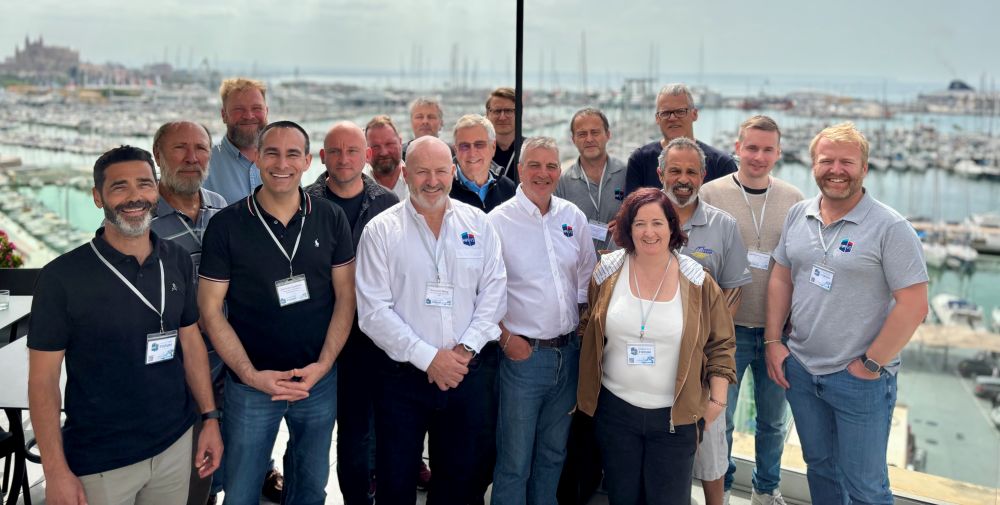
In April, we held the HPiVS Surveyors’ Forum 2026 in Palma, Mallorca. It was a valuable opportunity to:

  • share insights and regulatory updates
  • strengthen how we work together
  • explore new ways to support our customers wherever they (or their vessels) are located in the world.

Among those taking part were HPiVS Authorised Inspectors covering Scandinavia, Germany, France, the Caribbean, the USA, and Spain. They included some of the most respected names in the world of marine standards who sit alongside our own team on a number of regulatory working groups to help evolve small craft standards to meet industry needs.

This exceptional global network, combined with our commitment to continuous learning and development, ensures our customers consistently receive the highest standard of support and service. 

Thank you again to our partner surveyors who were able to join us for this session. We hope to see you (and our other partners who unfortunately could not join us this time!) soon.

If you’re interested in joining HPiVS as a partner Authorised Inspector, please contact us: marine@hpivs.com

Global partners

Guidance for smoother entry to EU market

Are you importing boats into the EU? Did you know that non-EU manufacturers must have someone based in the EU to take responsibility for product compliance? This is typically an importer or Authorised Representative and their name and address must be on your Declaration of Conformity. Following this protocol helps to ensure a straightforward transit into the European market.

We have recently become aware of an situation where a non-EU manufacturer did not have a suitable EU-based representative taking responsibility for compliance.  As a Notified Body, it is not our role to check or verify our customers’ economic operators. However, to help you understand what you need to do to ensure conformity (and a smoother entry to the European market), we’ve prepared a free Guidance Note 7 – Economic Operators in EU for Manufacturers in Third Countries