Giving an Assembly a PED category – A help or a hindrance?

By Toby Read

If you manufacture CE marked assemblies that fall within the scope of the Pressure Equipment Directive, you’ll be familiar with the concept that, with the exception of those that fall within Article 4(3) (i.e. Sound Engineering Practice), they have a hazard category. But what if those assemblies don’t really require a category and that attributing them one is more of a hindrance than a help?

Categories classify pressure equipment according to a level of hazard, and they have two main purposes. One is to determine which Conformity Assessment Procedure (i.e. Module(s)) can be applied, and the other is to affect the obligations in a handful of essential safety requirements. The categories for pressure equipment are ascertained by referring to Conformity Assessment Tables in the Directive. However, you won’t find such a table for assemblies. So how are they categorised?

Choose a Conformity Assessment Procedure

Well, you won’t find anywhere in the Directive a requirement to ascertain the category of an assembly. And I think that’s for a good reason; you don’t need one to assess its conformity. Article 14 paragraph 2.6(b) of the Directive tells you that the assessment of the integration of the various parts of the assembly is determined by the highest category applicable to the equipment concerned other than the safety accessories. So, in other words, all you need to know to choose a Conformity Assessment Procedure is the highest category applicable to the equipment in the assembly, ignoring the safety accessories. The assembly itself doesn’t need a category for you to do this.

Is this just semantics? I don’t think it is. The problem with attributing a category to an assembly is that it implies that there’s one corresponding level of hazard that envelops the assembly, when this is not the case. It creates the wrong mindset. A more accurate way to view it is that the various items of pressure equipment in the assembly each have their own level of hazard, as indicated by their respective categories.

Essential safety requirements

But how about those essential safety requirements that are affected by the category? Doesn’t an assembly need to have a category for these?

There are just five essential safety requirements which are affected by categories: ESR 3.1.2, 3.1.3, 3.2.2, 4.2(b) and 4.3.

  • ESR 3.1.2 relates to permanent joining, ESR 3.1.3 to NDT personnel. However, the category of permanent joints between the items of pressure equipment in an assembly are determined individually, not by categorising the assembly, so an assembly’s category is not relevant.
  • ESR 4.2(b) and 4.3 relate to materials. But materials, with the exception of those for permanent joining, are not used in the manufacture of assemblies; they are used in the manufacture of pressure equipment. ESR 4.2(b) is not appliabale to joining materials, and the obligations in ESR 4.3 that are affected by a category are not applicable to joining materials either. So, again, an assembly’s category is not relevant.
  • The fifth of these essential safety requirements is ESR 3.2.2, and it allows for category I series-produced assemblies to be pressure tested on a statistical basis. I’ll address this point a little later.

So, putting aside ESR 3.2.2, why do we give assemblies categories? Possibly because PED guideline A-39 says ‘the Directive clearly defines a category for each assembly in Article 14 paragraph 2.6 (b)’. But does Article 14 paragraph 2.6 (b) really say that? It makes no reference to an assembly having a category, referring only the highest category of equipment within the assembly. I think that Article 14 paragraph 2.6 (b) tells the manufacturer how to assess, not categorise, its assembly.

But in which case, why does the guideline say assemblies have categories? The issue it’s addressing is a weakness in the drafting of one of the exemptions from the scope of the Directive.  Article 1(2)(f) exempts pressure equipment from the Directive if it’s covered by one or more of a number of listed Directives and, importantly, is classified no higher than category I. The problem is that without being assigned categories, assemblies would not benefit from that exemption.

So you can understand why it might at first sight seem helpful to say that assemblies have categories. And it is to an extent. But I think it’s like swallowing a spider to catch a fly. It resolves the issue of the exemption in paragraph 2 (f) and also allows for the pressure testing on a statistical basis which I referred to earlier, but it leaves most assembly manufacturers wondering what the significance is of the hazard category that’s seemingly enveloped their entire assembly. It gives the impression that the assembling of the parts has inexplicably introduced a higher level of hazard in some parts of the assembly than they otherwise would have had.

I think it would be simpler to just interpret Article 1 paragraph 2 (f), and also the option to pressure test series-produced assemblies on a statistical basis, by considering the highest category applicable to the equipment in the assembly ignoring the safety accessories, thereby making the need to categorise assemblies redundant. And by not assigning an assembly a category, the manufacturer is in a better position to clearly see the different levels of hazard that its assembly’s constituent parts truly present.

For more information, please get in touch with our team: enquiries@hpivs.com

2026 Surveyors Forum

Global partners

We work with an outstanding network of partner Authorised Inspectors from across the world. They enable us to deliver the highest quality compliance services to our customers.

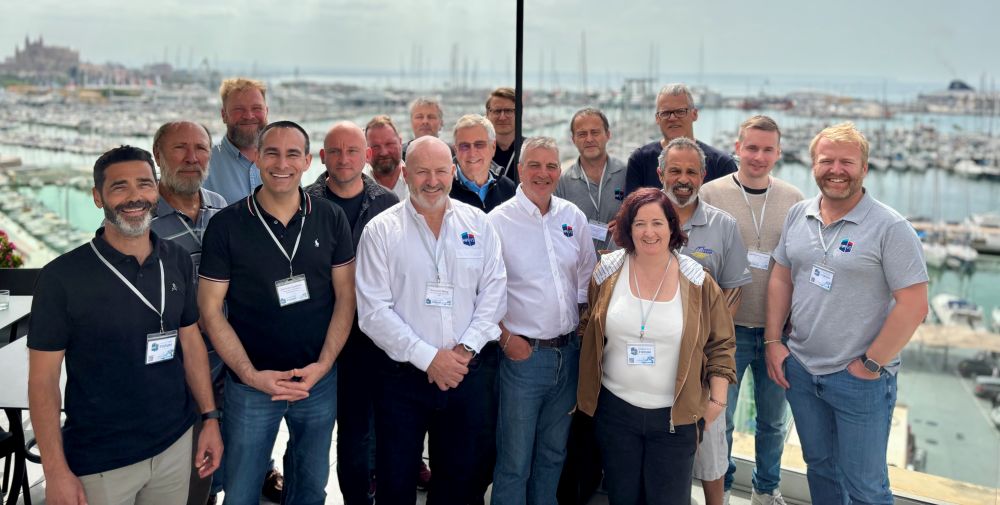
In April, we held the HPiVS Surveyors’ Forum 2026 in Palma, Mallorca. It was a valuable opportunity to:

  • share insights and regulatory updates
  • strengthen how we work together
  • explore new ways to support our customers wherever they (or their vessels) are located in the world.

Among those taking part were HPiVS Authorised Inspectors covering Scandinavia, Germany, France, the Caribbean, the USA, and Spain. They included some of the most respected names in the world of marine standards who sit alongside our own team on a number of regulatory working groups to help evolve small craft standards to meet industry needs.

This exceptional global network, combined with our commitment to continuous learning and development, ensures our customers consistently receive the highest standard of support and service. 

Thank you again to our partner surveyors who were able to join us for this session. We hope to see you (and our other partners who unfortunately could not join us this time!) soon.

If you’re interested in joining HPiVS as a partner Authorised Inspector, please contact us: marine@hpivs.com

Global partners

Guidance for smoother entry to EU market

Are you importing boats into the EU? Did you know that non-EU manufacturers must have someone based in the EU to take responsibility for product compliance? This is typically an importer or Authorised Representative and their name and address must be on your Declaration of Conformity. Following this protocol helps to ensure a straightforward transit into the European market.

We have recently become aware of an situation where a non-EU manufacturer did not have a suitable EU-based representative taking responsibility for compliance.  As a Notified Body, it is not our role to check or verify our customers’ economic operators. However, to help you understand what you need to do to ensure conformity (and a smoother entry to the European market), we’ve prepared a free Guidance Note 7 – Economic Operators in EU for Manufacturers in Third Countries

European Commission Update Regarding CE Marking on Certificates

In future, you won’t see a CE mark on Conformity of Assessment certificates issued by HPiVS. This is because the European Commission has recently clarified that:

“The CE mark should only be used by the manufacturer and only on the products to which it pertains. This means that:

  • The CE mark should not be used on the certificates issued by the CABs;

  • When instances are found that CABs do not comply with the above, NABs shall ensure that compliance to Article 30 is restored, e.g. by raising a nonconformity for this issue.

  • The NABs attention is requested for this matter.”

What is a CAB and NAB?

HPiVS is a Conformity Assessment Body (CAB). We are overseen by the National Accreditation Body (NAB) in Ireland: INAB.

What does the change mean for my business?

Existing Conformity Assessment certificates from HPiVS with the CE mark on them are still valid. Any Conformity of Assessment certificates we issue in the future will not have the CE mark on them. They will look different, but there is no other change and you do not need to take any action.

Why has this change been implemented?

The change has been introduced to clarify the existing regulations.

Please do get in touch with our team if you have any questions: enquiries@hpivs.com

Quick Guide: World Sailing Offshore Structural Review

Since 1st of January 2010, World Sailing has required boats that are to be compliant with their Offshore Special Regulations, to have their scantlings certified. World Sailing themselves issue the certificate but a review of scantlings must be performed by a RCD Approved Body / Notified Body that is specially recognised by World Sailing. HPiVS is one of the bodies that has been recognised.

The procedure requires the owner or builder to apply to the Notified Body for a review.  The scope of the plan review shall be to ISO 12215 parts 5 (hull and deck), 8 (rudders) & 9 (appendages) as applicable for design category A.

There are two forms of certification:

1) Series production; where several boats of the same type are produced in accordance with the plans and therefore each yacht will not require individual review and certification

2) Custom or unique boat where the boat is a one of a kind yacht or a series production yacht that has been built or modified such that it is not in accordance with the plans of that series.

On the successful conclusion of that review, the Notified Body makes a formal application to World Sailing for a certificate. The Approved Body must pay World Sailing for the certificate and the owner or builder must pay the Notified Body for the review and certificate.

How quickly can the review be carried out?

The review will be completed by HPiVS within two weeks of receipt of structural drawings and payment. The certificate is usually issued by World Sailing within a few days.

World Sailing publishes a list of yachts reviewed under the scheme on its website. If the yacht is a series type production, there will be a single entry for that type of yacht with a link to a certificate for an owner or builder to make a hardcopy. The owner then signs the declaration including the WIN/CIN/HIN of their particular yacht. For a unique yacht the certificate will not be published on the website and certificates will be issued direct from the World Sailing recognized Notified Body upon compliance with the review requirements.

OSR Structural Plan Reviews and CE Marking

As well as carrying out standalone structural plan reviews, we can also build these reviews into our CE marking assessment. This saves boat builders time and money and makes yachts ready to race; an appealing extra selling point.

Find out more

To find out more and to arrange for one of our experienced experts to carry out a review, please go to our website or contact us.

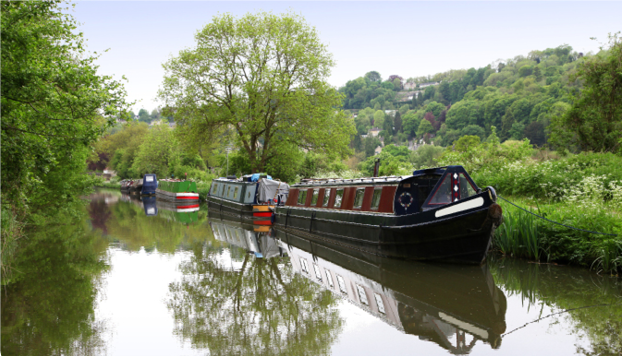
Get Your Inland Waterways Boat Compliant with a PCA from HPi Verification Services

If you’re bringing a new inland boat into service or selling for the first time, make sure it ticks all the regulatory boxes with a Post Construction Assessment (PCA) from HPi Verification Services.

As a leading EU Notified Body and UK Approved Body for recreational craft and components, HPiVS has issued over 20,000 certificates in the last 25 years. We’ll help ensure you’ve got the right documentation for legal compliance—and peace of mind.

Come see us at the Crick Boat Show, Saturday 24 to Monday 26 May 2025 at stand WW75.

Explore boats both afloat in the marina and on display in the Show Village. From canal boats to cruisers, it’s a brilliant chance to meet some of the team and ask your questions.

We look forward to chatting with you there.

More information

Contact us

UK Tel +44 (0)1491 822818

AMS partner with HPiVS to help expand companies global market reach

Andaman Marine Surveyors (AMS), in partnership with HPi Verification Services (HPiVS Ireland), based in Phuket, Thailand, offers CE and UKCA certification services for vessels up to 24 meters across Southeast Asia. These certifications are vital for yacht manufacturers seeking to enter the European and UK markets.

About AMS

Founded by Marine Surveyor Anthony Gates, Andaman Marine Surveyors (AMS) provides a range of marine surveys for pleasure craft and expert guidance at every stage of boat ownership. AMS offers practical, impartial advice for clients buying new or used vessels, as well as for boat owners and superyacht captains.

Why do I need CE & UKCA Certifications

  • CE Certification ensures compliance with EU regulations, enabling market access within the European Economic Area (EEA).
  • UKCA Certification is required for the UK market, guaranteeing compliance with post-Brexit standards.
  • CE certification is also recognised in other international markets, including Australia and New Zealand, broadening your global reach.

For more information, contact Anthony Gates

Website: www.ams-sea.com

HPiVS PED Seminar: A Comprehensive Overview

On February 28, 2025, Matteo Convento and Vladislav Maslov led a specialised Pressure Equipment Directive (PED) seminar for STFC UKRI at their Harwell (Didcot) facility. The seminar attracted 15 participants eager to gain a deeper understanding of the key aspects of the PED.

What Was Covered in the Seminar?

The one-day offline session provided attendees with critical insights into the essential components of the PED, along with practical knowledge for applying it effectively. Key topics included:

  1. Main requirements of Pressure Equipment Directive 2014/68/EU
  2. Responsibilities of economic operators
  3. Essential safety requirements (ESR, Annex I)
  4. Equipment categorisation (Annex II)
  5. Conformity assessment modules (Annex III)
  6. Some practical tips for design/technical file content
  7. Important notes regarding ESR for materials, welding, NDT
  8. Q&A session

Who are STFC UKRI

The Science and Technology Facilities Council (STFC) is a global leader in research and innovation. With campuses at Harwell and Daresbury, as well as research facilities across the UK and internationally, STFC plays a vital role in advancing fundamental research in fields such as astronomy, physics, computational science, and space science. Their work helps uncover the mysteries of the universe, offering cutting-edge scientific advancements.

HPiVS Seminars

HPiVS offers similar seminars to all interested companies and can provide customised seminars upon customer request.

Announcing CE Certification for American Boatbuilders

HPi Verification Services (HPiVS) has partnered with Boksa Marine Design (BMD) to provide Notified Body certification services in the United States. HPiVS, a leading provider of technical and regulatory services for the marine industry, is a Notified Body authorised to issue certificates on behalf of the EU Commission for products requiring a CE mark to access the European market. BMD will conduct onsite inspections and surveys of boats and equipment manufactured in the U.S. that require CE certification for distribution in Europe.

HPiVS delivers high-quality verification services across a range of industries and maintains partnerships with global organisations. Achieving Notified Body status means that HPiVS operates under a code of conduct and a quality system licensed by the Irish government on behalf of the EU Commission. This allows HPiVS to offer a CE certification service.

Boksa Marine Design is a naval architecture and marine design firm based in Lithia, Florida, just outside Tampa. Specialising in full-scale vessel design and engineering, BMD develops vessels that comply with class standards, regulatory requirements, and flag state regulations. The company collaborates closely with OEMs to ensure their products meet certification requirements for global distribution.

“Boksa Marine Design will perform surveys for pleasure craft and supply those results to HPi for review and certification purposes,” said Jeff Kuenning, the firm’s vice president of naval architecture. “With years of experience providing class and compliance services to luxury yacht builders, production boatbuilders and commercial shipyards, BMD is proud to partner with HPiVS. We look forward to ensuring all American boatbuilders in the European market adhere to CE recreational craft regulations.”

Boatbuilders, yacht builders, and OEMs seeking CE certification for their products can schedule in-person meetings with BMD’s naval architects and engineers at the Miami International Boat Show, taking place February 12–16, 2025.

Insights from ABYC Standards Week

Last week, we had the privilege of attending ABYC Standards Week, where we participated in critical discussions and stayed up to date on key developments in marine compliance.

The event covered a wide range of significant topics, including fire-fighting equipment, CO2 detectors, bilge pumping, and outboard engine weights. Additionally, updates on upcoming ISO standards were shared. While there are notable similarities between the Recreational Craft Directive and ABYC standards, the event also highlighted key differences that require careful consideration.

With CEproof software, available at Rulefinder.net, we offer certification to the EU Recreational Craft Directive or the option to issue a voluntary Statement of Conformity to ABYC standards, ensuring your compliance needs are met effectively.