
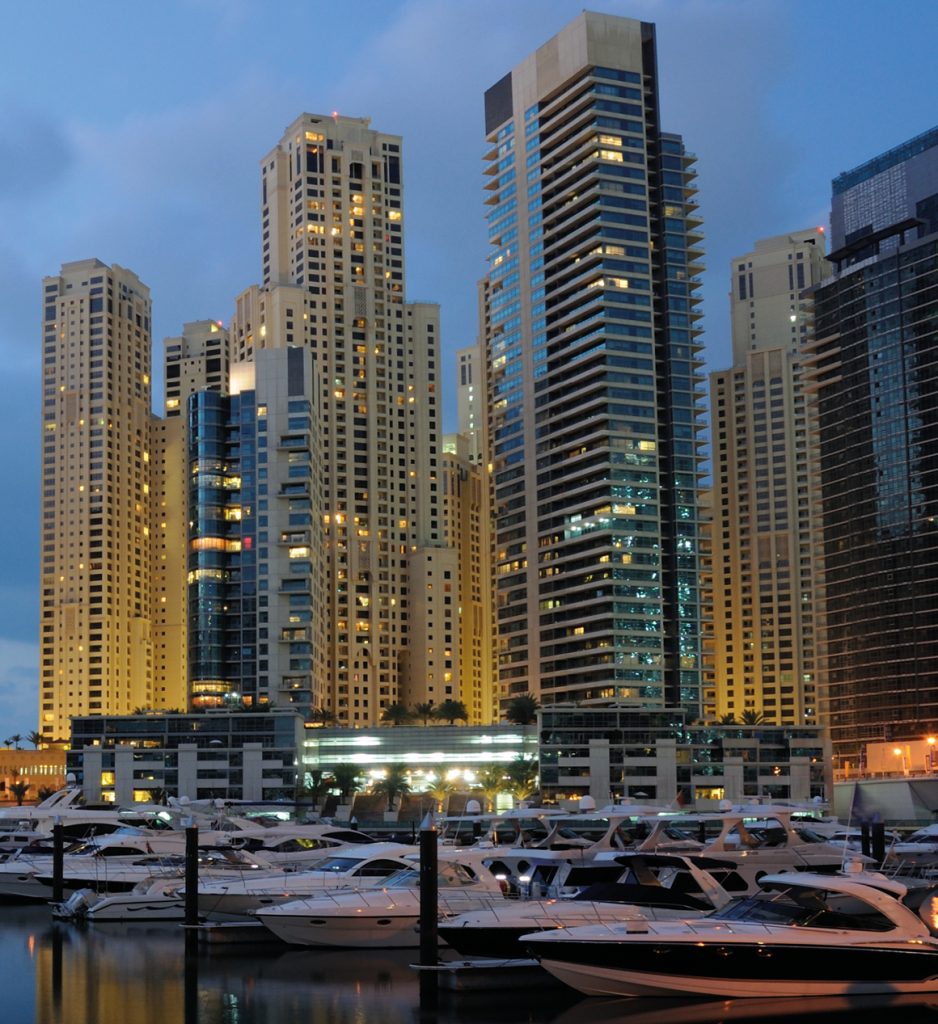
Do you want to sell recreational vessels in Saudi Arabia?
Vessels sold in Saudi Arabia must comply with the Technical Regulation for Watercrafts (TRW). This essential certification means you can display the Saudi Quality Mark SASO.
We are authorised to issue Technical Regulation for Watercrafts certificates through our collaboration with Intertek UK, Accepted Body #0071.

The Technical Regulation for Watercrafts is broadly similar in scope to the EU Recreational Craft Directive (RCD). The close resemblance to the RCD means our experienced team can quickly and comprehensively help you to complete the necessary steps for compliance. This helps you to get your product to market faster and with peace of mind.
If applicable, we can complete this certification at the same time as we issue you with a CE (or UKCA) mark. This will reduce duplication and costs.
What is the Technical Regulation for Watercrafts?
The Technical Regulation for Watercrafts is a legal requirement. It applies to all recreational watercraft with a hull length between 2.5m and 24m. Vessels must comply when first placed on the market in Saudi Arabia or first put into service in Saudi Arabia. Responsibility for compliance rests with a manufacturer who sells a boat or with an owner or importer who brings the boat to Saudi Arabia.
Compliance with the TRW enables you to apply the Saudi Quality Mark (SQM) to your product. For use of this mark to be granted, the final documentation must be registered on an online portal called SABER.
Whilst similar to the EU Recreational Craft Directive (RCD), there are some very notable differences. The main difference is that every product in the scope of the TRW must be certified by an Accepted Body. By contrast, the RCD only requires higher-risk craft to be certified. This means a vessel that does not need to comply with RCD may need to comply with TRW.
Other differences between the TRW and RCD include:
- Navigation lights need their own formal certification.
- A formal risk assessment must be included in the product’s Technical File.
- All labels and the maker board must be written in Arabic language.
- Ongoing production requires ongoing factory visits by an Accepted Body.
Scope of the Technical Regulation for Watercrafts
The scope of the regulations is the same as the European RCD with one addition. Navigation lights need their own formal certification by a Saudi Arabia Accepted Body.
The exhaustive list is:
- Recreational watercraft with hull length between 2.5m and 24m
- Personal Watercraft
- Internal combustion engines intended for propulsion of recreational watercraft
- The following components intended for installation on recreational watercraft:
- Ignition protected equipment
- Start-in-gear protection devices for outboard motors
- All components of steering systems, including steering wheels
- Permanently installed fuel tanks and fuel hoses
- Hatches [which is understood to include port lights]
- Navigation lights
Exclusions
The TRW has the same exclusions as the RCD. This includes craft with an unconventional mode of operation, for example, hydrofoils. We can provide risk assessments for these vessels to reduce liability and meet your insurance and funder requirements.
Craft intended solely for racing or for commercial purposes are also excluded (if they are labelled as such). If the craft is intended primarily for racing or commercial use but may cruise from time to time, it is not excluded.
The following shall be excluded from the scope of the regulations:
Excluded from scope
(i) watercraft intended solely for racing, including rowing racing boats and training rowing boats, labelled as such by the manufacturer;
(ii) canoes and kayaks designed to be propelled solely by human power, gondolas and pedalos;
(iii) surfboards designed solely to be propelled by wind and to be operated by a person or persons standing;
(iv) surfboards;
(v) original historical watercraft and individual replicas thereof designed before 1950, built predominantly with the original materials and labelled as such by the manufacturer;
(vi) experimental watercraft, provided that they are not placed on the market;
(vii) watercraft built for own use, provided that they are not subsequently placed on the market during a period of five years from the putting into service of the watercraft;
(viii) watercraft specifically intended to be crewed and to carry passengers for commercial purposes, without prejudice to paragraph 3, regardless of the number of passengers;
(ix) submersibles;
(x) air cushion vehicles;
(xi) hydrofoils;
(xii) external combustion steam powered watercraft, fuelled by coal, coke, wood, oil or gas;
(xiii) amphibious vehicles, i.e. wheeled or track-laying motor vehicles, which are able to operate both on water and on solid land.
Essential requirements
Annex 2 of the TRW sets out Essential Requirements that mirror those in the RCD. It addresses the watercraft’s design and construction (Part A), engine exhaust emissions (Part B), and noise emissions (Part C).
To meet these requirements, products must conform to the ISO standards listed in Annex 1 of the regulation.
Unlike the RCD, which treats ISO standards as one possible means of compliance, the TRW mandates conformity with ISO standards. This distinction represents a significant difference between the two regimes.

Documentation
As with the RCD, manufacturers must provide an Owner’s Manual with each watercraft. They must also supply a user guide or instructions for components, as appropriate. The manufacturer must compile a Technical File, although the required contents differ to RCD. For example, the TRW requires the Technical File to include a formal risk assessment document.
Finally, and most importantly, suppliers must issue a Declaration of Conformity for all products. By signing this document, the supplier formally confirms that the product complies with the applicable requirements, identifies who certified it, and lists the standards applied.
Our CEproof software provides you with a template for your Declaration of Conformity as well as other essential documents.